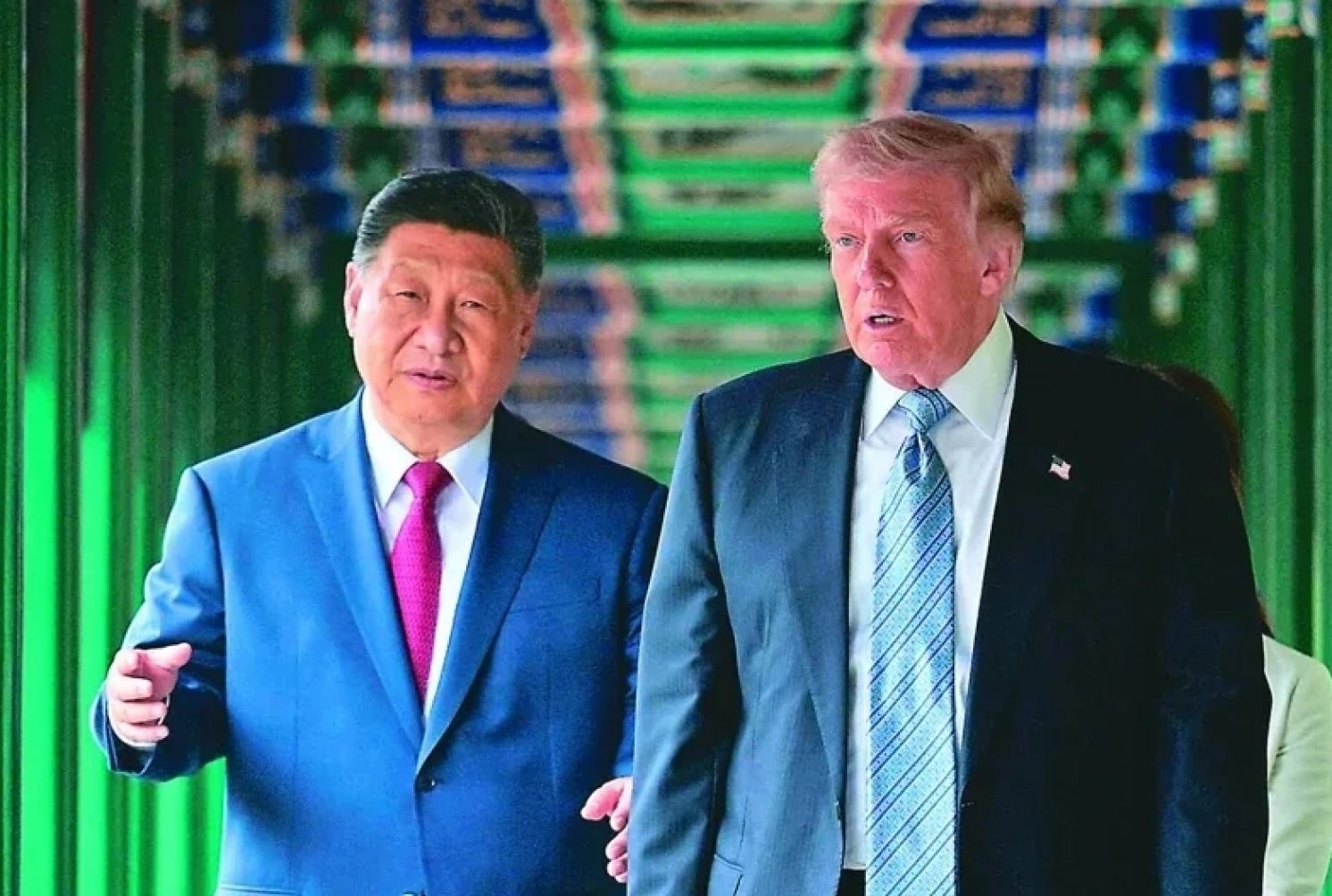
Trump-Xi Consensus: Taiwan Must Not Rely on the U.S. to Seek Independence
United Daily News Editorial, May 17, 2026
After holding back for two days, President Donald Trump of the United States finally poured out his remarks regarding the Taiwan issue after Air Force One took off from Beijing. It turns out that Mr. Trump and Chinese President Xi Jinping had talked through the night about Taiwan, and Mr. Trump even claimed that he now understands Taiwan better than he understands other countries. He told the media that he does not want to see anyone moving toward independence, and that Taiwan should not expect a blank check of military support from the United States. Mainland Chinese state media also released remarks from Minister of Foreign Affairs Wang Yi stating that the Chinese side felt that the United States understood China’s position, valued China’s concerns, and neither recognized nor accepted Taiwan moving toward independence. The greatest consensus from the Trump-Xi Beijing night talks was, unexpectedly, that Taiwan must stop “seeking independence by relying on the United States.”
Mr. Trump clearly pointed out that some people in Taiwan want independence because they want war, believing that the United States would support them from behind. Before the Trump-Xi meeting, the outside world paid close attention to whether Mr. Trump would change the long-standing U.S. position of “not supporting Taiwan independence” into “opposing Taiwan independence.” However, with his unique speaking style, Mr. Trump almost directly named and bluntly pointed out that some people in Taiwan want independence and want war. Mr. Trump emphasized that the United States does not want this war, and Taiwan should not expect the United States to provide unlimited military support. From the Trump-Xi meeting to the Trump-Xi night talks, Mr. Xi made Mr. Trump explicitly declare: Taiwan must not think of “seeking independence by relying on the United States!”
What the people should ask is: who exactly is wholeheartedly seeking independence and insisting on war, even at the cost of pushing Taiwan into an irreversible abyss?
Mr. Trump bluntly stated that he does not want to see the United States having to fight a war from 9,500 miles away, and hopes that Taiwan calms down and that mainland China also calms down. He also believes that mainland China would accept maintaining the status quo. The issue is that Communist China accepted former President Ma Ying-jeou’s “status quo,” questioned then former President Tsai Ing-wen’s “status quo,” and is suppressing the President Lai Ching-te’s “status quo.” Clearly, at least regarding the “new two-state theory” of “mutual non-subordination,” Communist China believes that the “status quo” maintained from the Ma administration to the Lai administration has fundamentally changed. Does Mr. Trump share this perception as well?
Mr. Trump said that American policy toward Taiwan has not changed, and that he has not made commitments in any direction. This is the position repeatedly reiterated by the Department of State, and it is also the talking point the Lai administration has continuously used before and after the Trump-Xi meeting to reassure the public. However, Mr. Trump broke from the Six Assurances toward Taiwan upheld by every U.S. administration since President Ronald Reagan by bringing the issue of arms sales to Taiwan directly to Beijing for detailed discussions with Mr. Xi. This is precisely the greatest change and risk concerning Taiwan’s security.
The Six Assurances are the most important U.S. commitment to Taiwan’s security; yet Mr. Trump said those were matters from a long time ago. In fact, if Mr. Trump can fall out with traditional allies such as Canada and European countries, and even withdraw part of the U.S. troops stationed in Germany, then the Lai administration cannot continue deceiving itself with claims that “Taiwan-U.S. relations are rock solid.” Taiwan must face reality, reassess U.S. commitments, and review and rebuild its national defense autonomy. As for those who want independence and want war, they should not expect a blank check from the U.S. military to fall from the sky.
Most critically, after the lengthy Trump-Xi talks, Trump still “may or may not” approve arms sales to Taiwan. Mr. Trump even openly stated that whether arms sales to Taiwan would be shelved depends on China, but for the United States, this is a very good bargaining chip. Moreover, Mr. Trump once again repeated that Taiwan stole America’s semiconductor industry. Therefore, it must be noted that whether Mr. Trump approves arms sales to Taiwan clearly does not depend on the level of the People’s Liberation Army (PLA) threat toward Taiwan, but rather to a greater extent on a broader U.S.-China grand bargain. As for Taiwan, from semiconductors to arms purchases, it clearly neither dares nor has any room to negotiate.
Mr. Trump had previously already stated that he believes Mr. Xi would not use force against Taiwan during his term, and in Beijing he further declared that Taiwan would not be allowed to “seek independence by relying on the United States.” As Mr. Wang described it, the Trump-Xi night talks allowed Mr. Xi to “feel” that the United States values China’s position and concerns. Therefore, the new positioning of U.S.-China relations proposed by Mr. Xi as a “constructive strategic stability relationship” must inevitably include preventing Taiwan from “seeking independence by relying on the U.S.” Unless Mr. Trump changes his stance once again, the Democratic Progressive Party (DPP) and Lai administration’s attempts to maneuver for Taiwan independence within gray areas are bound to hit obstacles in the United States. The resulting impact may mean that President Lai’s transit diplomacy and Taiwan’s international participation will likely face even greater restrictions.
Mr. Trump has already named the issue directly. If some people are still pretending to sleep, then the people can only pray that heaven protects Taiwan!